
A Heritage Appointment in Lingnan, a Study Tour of Mountains and Seas: Sun Yat-sen University 2026 International Summer School on "Cultural Heritage Tourism and Communication" Successfully Concludes
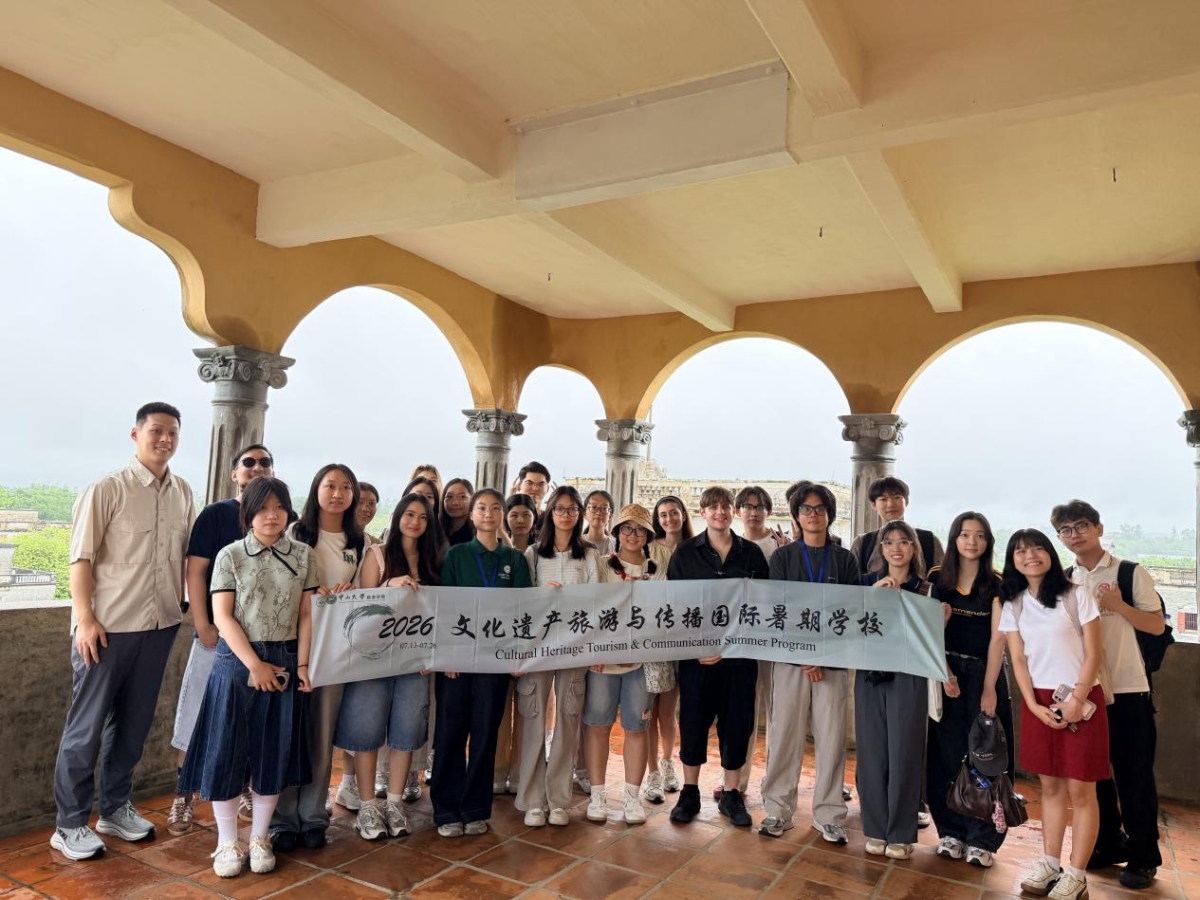
From July 13 to 26, 2026, under the guidance of the China Scholarship Council, the 2nd International Summer School on "Cultural Heritage Tourism and Communication" was successfully concluded. It was hosted by the School of Tourism Management at Sun Yat-sen University and the UNESCO Chair on Sustainable Tourism in UNESCO Designated Sites, co-organized by the University’s Hong Kong-Macao Cultural Tourism Collaborative Research Institute and the Digital Exhibition and Cultural Innovation Research Center, with support from the National Intangible Cultural Heritage Education-Industry Integration Community. This summer school continued the integrated teaching model of "cutting-edge lectures + field research +outcome seminar”, guiding participants to conduct team-based research projects. The study focused on the Guangdong-Hong Kong-Macao Greater Bay Area and the Chaoshan region, bringing together 25 interdisciplinary students from Panama, the Philippines, France, Spain, Singapore, Vietnam, and China. Over 14 days, participants completed fieldwork in three major areas: Kaiping, Foshan, and the ancient city of Chaozhou, exploring heritage conservation in Lingnan, community revitalization, and modern communication approaches.
1.Starting in Guangdong and based on theories
[Opening ceremony bathed in historical rhythm]
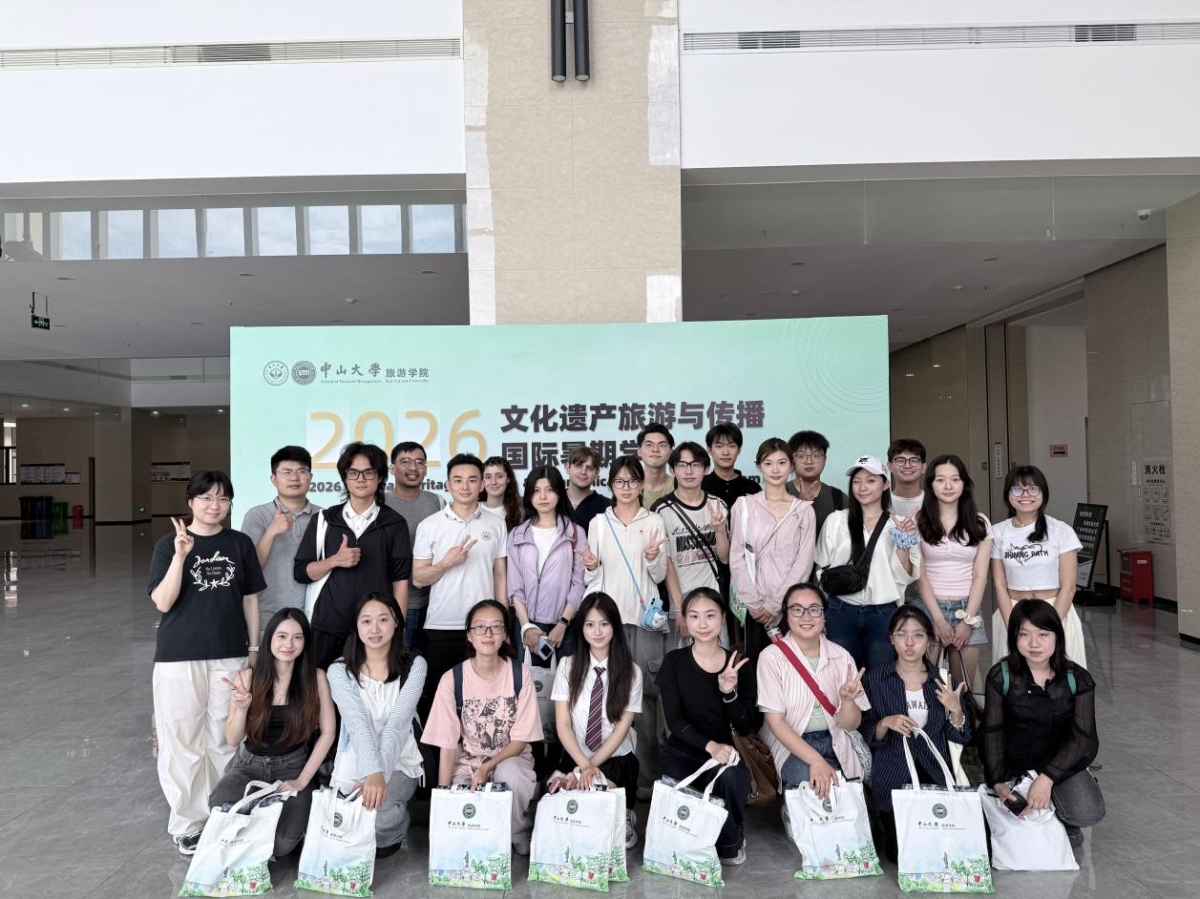
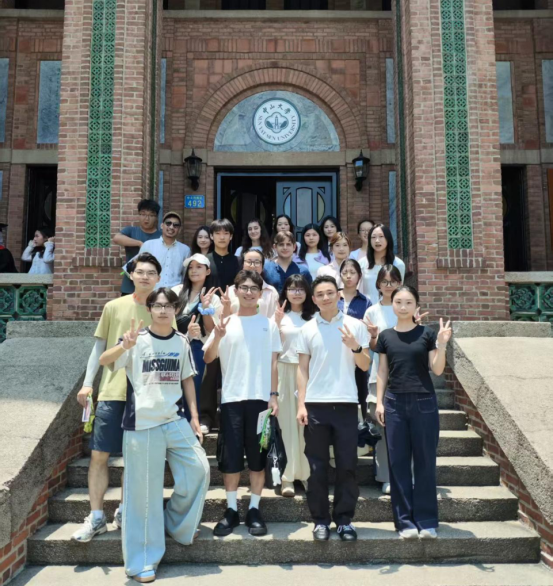
On July 13th, the students gathered at Swasey Hall on the South Campus of Sun Yat-sen University to participate in the opening ceremony of Sun Yat-sen University's 2026 International Summer Program, officially kicking off their academic journey. Led by head teacher Zheng Dazheng, the students strolled among the red bricks and green tiles, feeling the historical pulse of this century-old institution. During the ice-breaking session, students from various countries freely discussed their research interests, and the sense of unfamiliarity dissolved amid laughter and cheerful conversations, quietly fostering team cohesion.
[Eminent teachers’ classes interwining various thoughts]
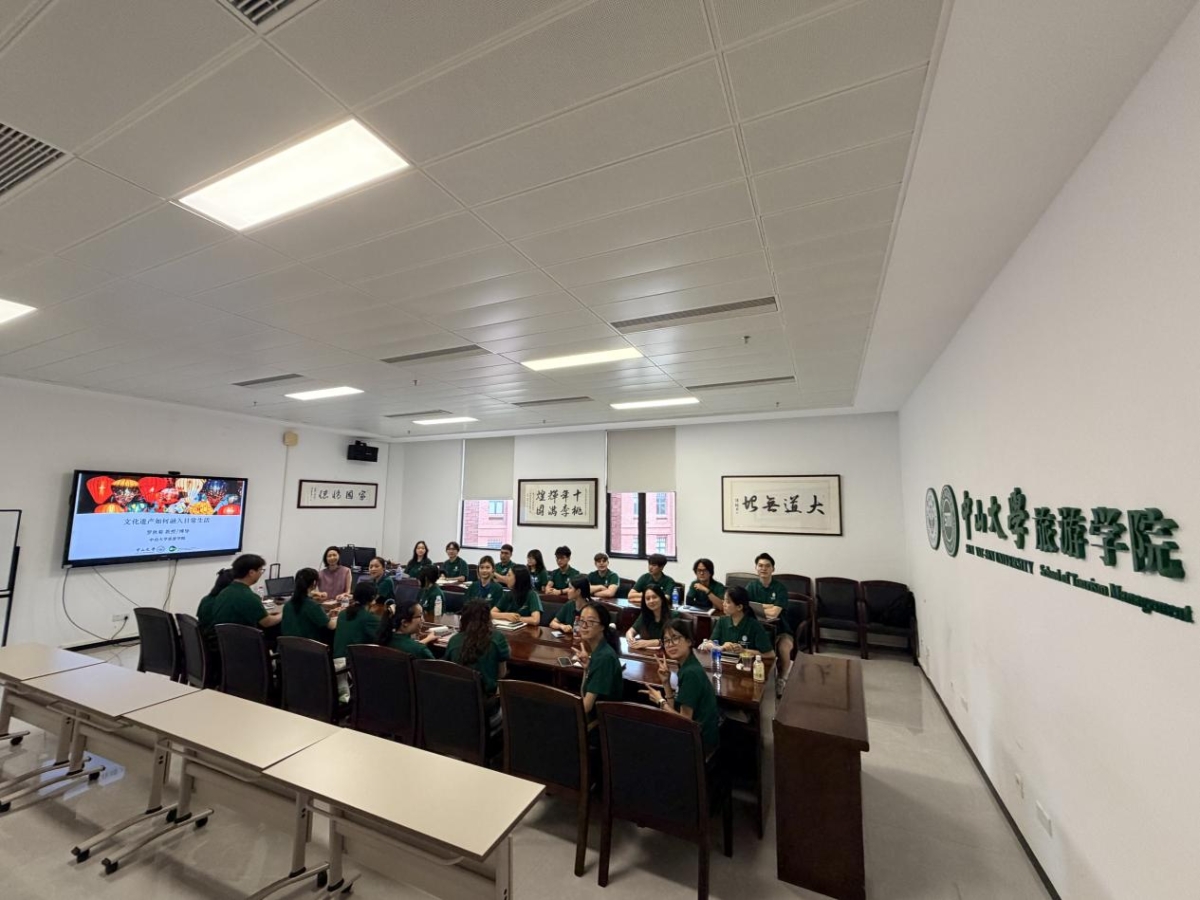
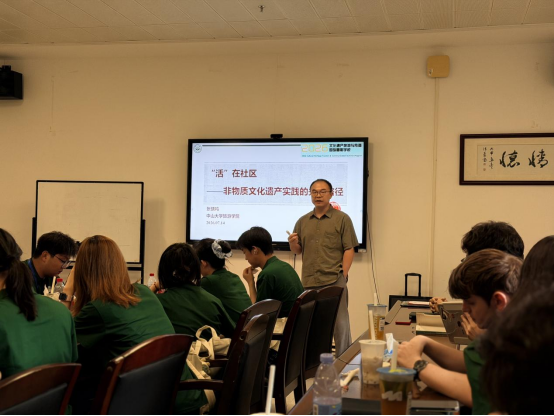
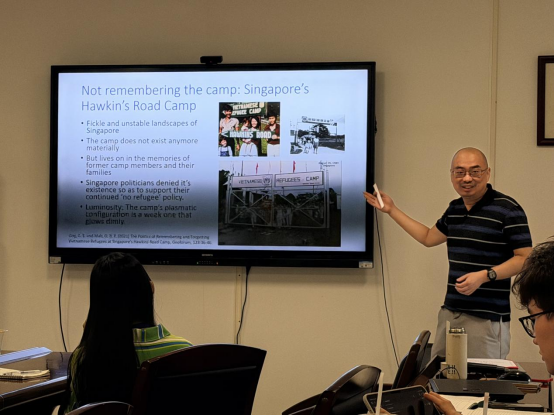
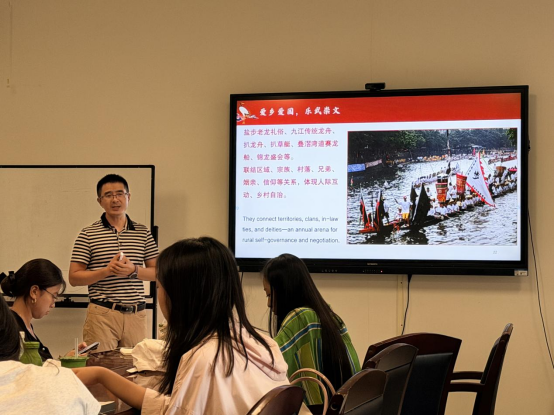
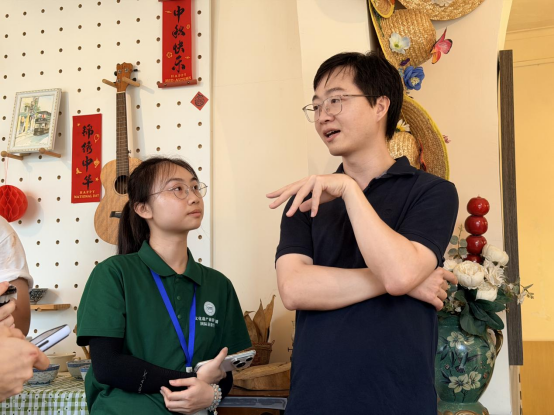
The summer school invited distinguished experts and scholars from home and abroad to build a diverse theoretical framework. Professor Luo Qiujv from Sun Yat-sen University shared insights on "How Heritage Integrates into Daily Life"; Professor Zhang Xiaoming from Sun Yat-sen University focused on community participation, interpreting the core logic of the living continuity of intangible cultural heritage; Professor Chin-Ee Ong (Wang Junyi) from Macau University of Tourism introduced cutting-edge global heritage practice cases, deepening the understanding of the relationship between heritage and community; Professor Xie Zhongyuan from Foshan University combined Guangfu cases to review local intangible cultural heritage practices, inspiring theoretical reflections on best practices; Assistant Researcher Zhuo Shaobing from Jinan University, drawing on his experience participating in the Kaiping project, systematically outlined diverse models and practical tensions in the development and utilization of tangible cultural heritage. This series of lectures laid a solid academic foundation for the subsequent field investigations.
2.Bay Area Exploration: Decoding New Paradigms of Heritage Revitalization
[Digital Intelligence Empowerment: From the Laboratory to the Field]
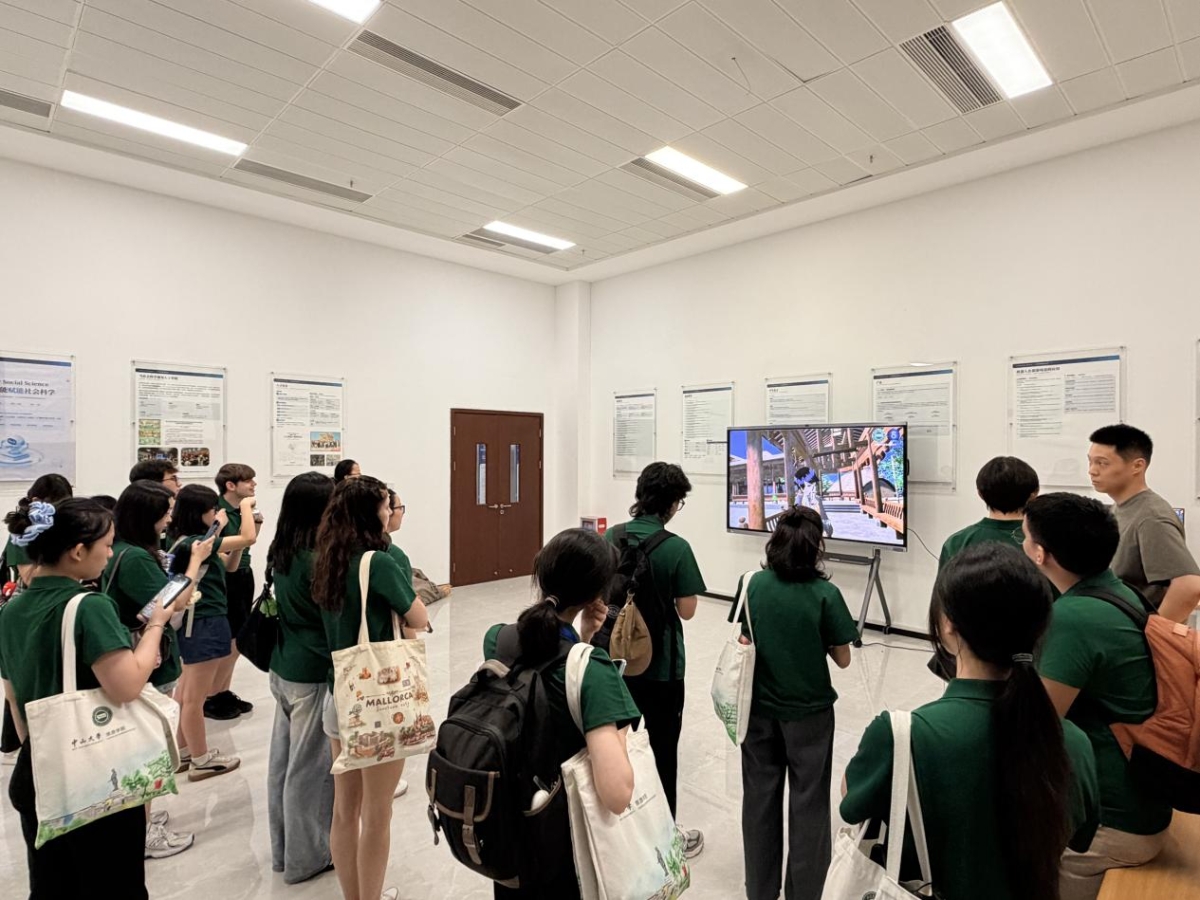
On July 14th, the trainees visited the Key Laboratory of Sustainable Tourism Intelligent Evaluation under the Ministry of Culture and Tourism and the "Azheke Project" achievement exhibition. Through immersive experiences using AR real scenes and rural monitoring big data technologies, the trainees gained a direct understanding of how digital tools can become powerful means to break boundaries in the dissemination of cultural heritage.
[Kaiping Diaolou: Memories of the Hometown of Overseas Chinese and the Way of Coexistence]
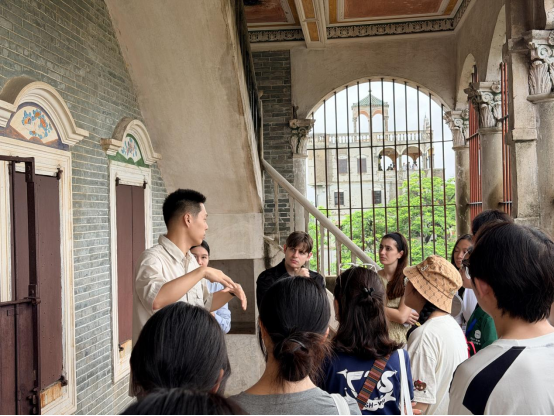
On July 15th, the team arrived in Kaiping and visited the Zili Village World Cultural Heritage Diaolou cluster, the old Tangkou market, and the Yingcun camp. Through on-site teaching and discussions led by Dr. Zhuo Shaobing, the participants gained a practical understanding of effective protection and utilization models of cultural heritage under the guidance of different stakeholders. The students also held discussions with local cultural and tourism workers, where they deeply explored long-term mechanisms for the symbiotic coexistence of rural tourism, the memory of overseas Chinese hometowns, and the interests of indigenous residents.
[Intangible Cultural Heritage in Foshan: Heritage inheritance experienced firsthand and on-site]
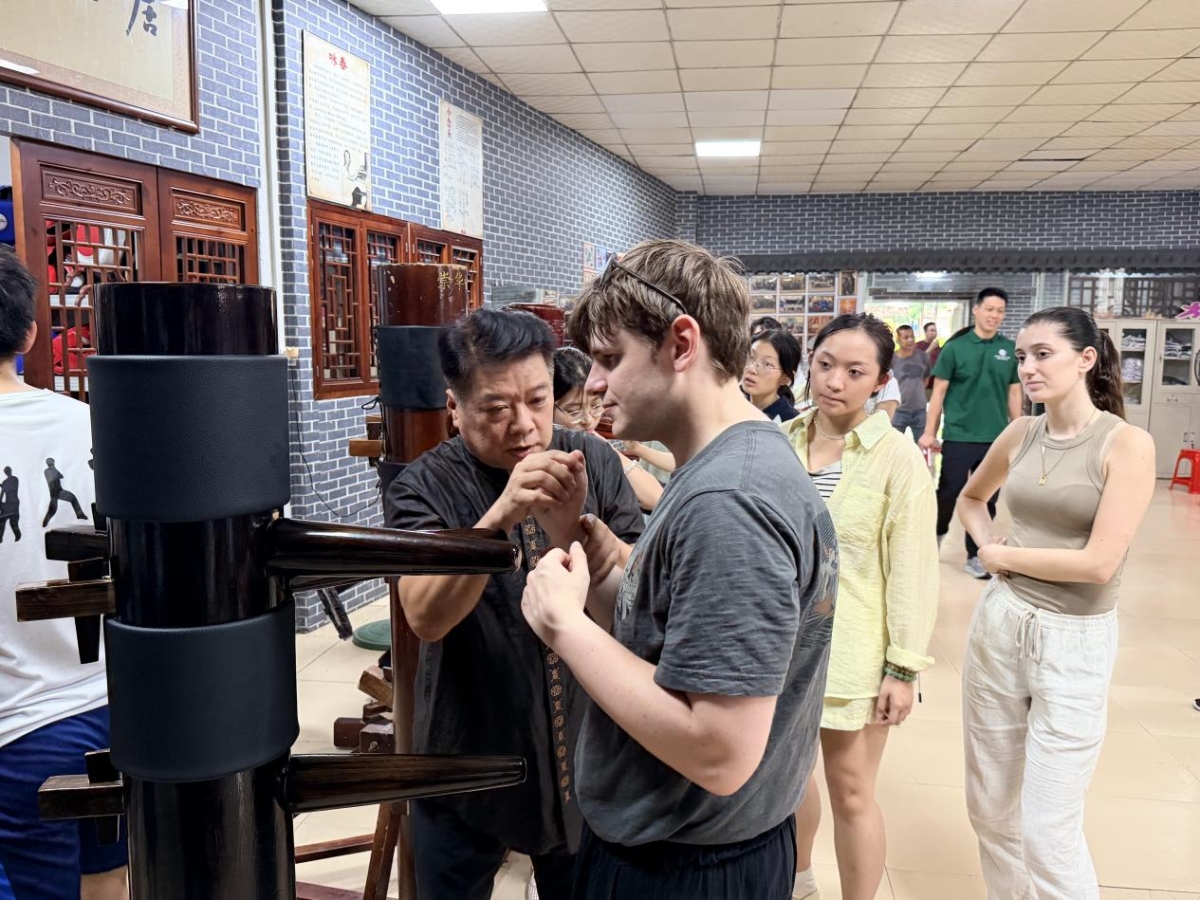
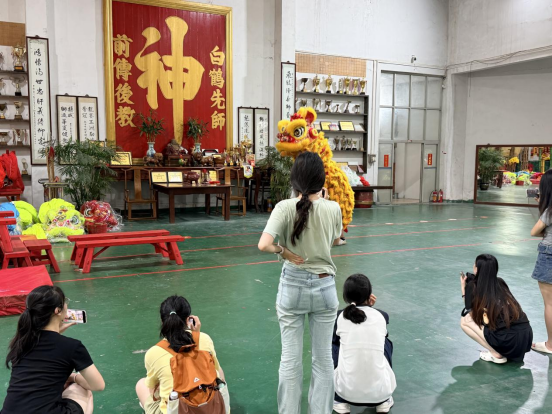
On July 18th, the study tour team moved to Nanhai, Foshan. In the morning, the participants experienced dragon boat racing firsthand at the Jiujiang Dragon Boat Base, gaining an understanding of the close connection between folk customs and the community. In the afternoon, at the Ip Man Chong Wah Wing Chun Martial Arts School and the Zhonglian Huang Feihong Dragon and Lion Dance Base, the participants personally practiced the wooden dummy techniques and watched young lion dancers leap and maneuver, deeply appreciating the enduring power of intangible cultural heritage related to physical arts.
[The Ancient Charm of Dunhuang: Cross-regional cultural dialogue]
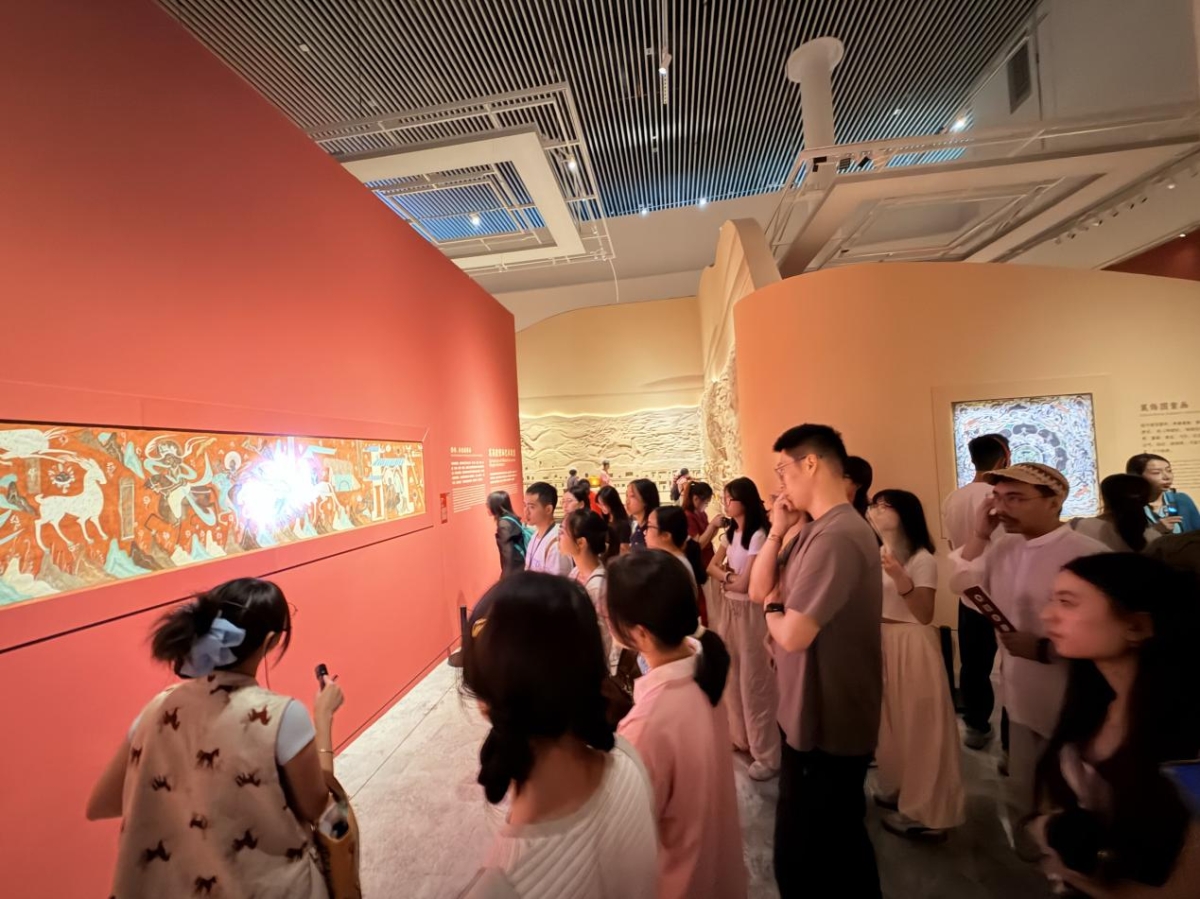
On July 24th, the students visited the Guangzhou Museum of Art to see the special exhibition "One Single Thought: Dunhuang". From copying paintings to mural restoration, from the brushstrokes of ancient craftsmen to modern technological restoration, the students witnessed how Dunhuang art transcends thousands of miles, "walking" out of the grottoes and "entering" the city. The application of digital technology and materials science truly empowers cultural heritage to enrich urban spaces and nourish modern life.
- In-depth Exploration of Chaozhou Charm: Independent Inquiry and Local Dialogue
[Preliminary exploration of the ancient city and determining research directions]
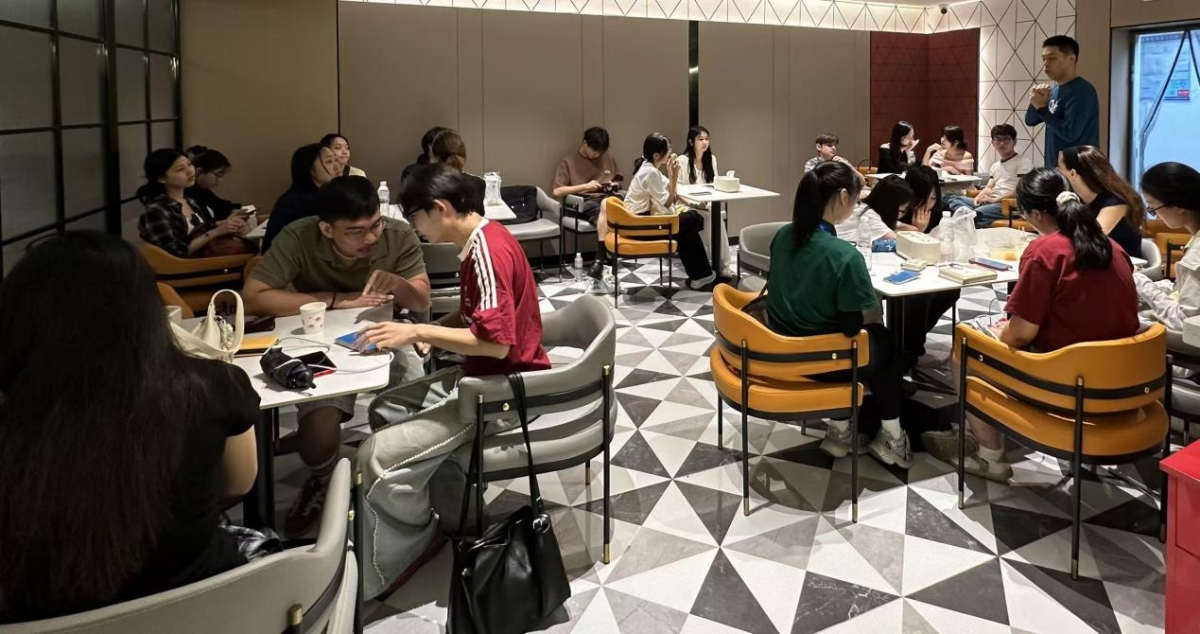
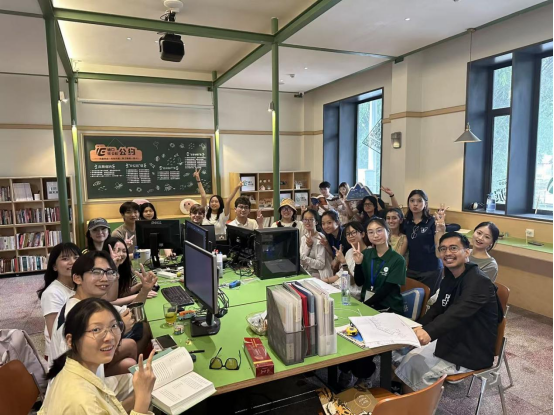
With a foundation of theoretical knowledge and research methods, the entire summer school moved to Chaozhou, where the students entered the group-based independent research phase. On July 19, everyone strolled together across Guangji Bridge, getting their first impression of the texture of the ancient city of Chaozhou. The next day, under the guidance of Professor Zhang Xiaoming, Associate Professor Xu Ding, and Dr. Pei Qirong, the students established four main research directions: ancient city preservation, heritage communication, community participation, and cultural tourism development. They then divided into groups to conduct in-depth field investigations in the streets and alleys.
[Tracing back a millennium of cultural heritage through archaeological studies]
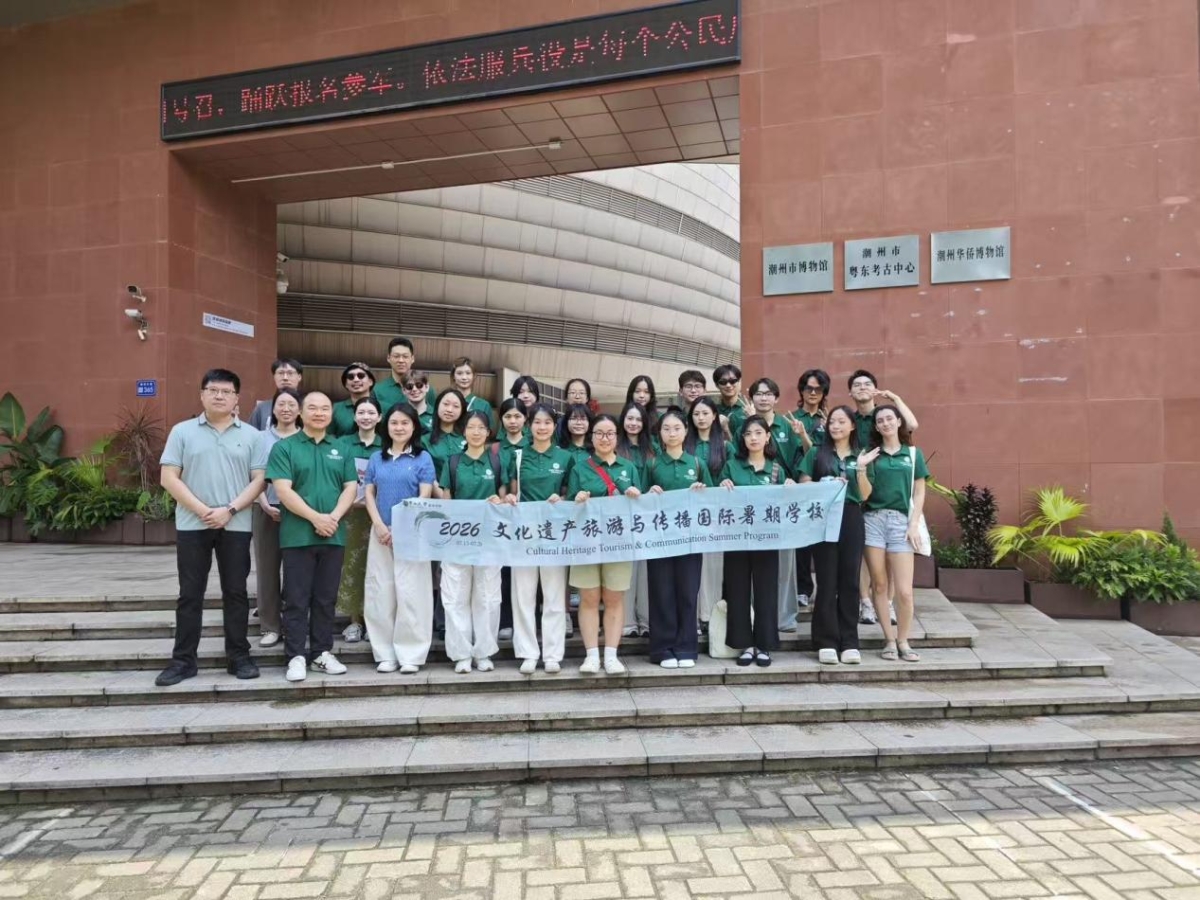
On the morning of July 21, under the careful arrangement of Yu Xiaojie, director of the Chaozhou Museum, deputy director Li Jin, and assistant curator Huang Zhaorong, several researchers gave comprehensive introductions related to the exhibition hall’s content, covering the maritime trade history of this national historical and cultural city, overseas remittance culture, and characteristics of ancient architecture. Among them, the brilliant explanation by Huang Sida, a cultural relics curator from the museum’s academic research department and a master’s graduate in Architectural History and Theory from Xi’an University of Science and Technology, sparked strong interest in exploration among many trainees.
In the afternoon, the trainees visited the special exhibition "When Olive Blossoms Bloom—The Life and World of Chaoshan Women" at the Chaozhou Art Museum to learn about Chaoshan intangible cultural heritage and daily life practices. Afterwards, the trainees followed professional technical staff from the Archaeological Survey Department of the Chaozhou Museum (East Guangdong Archaeological Center), Xi Yue (master in Archaeology from University College London) and Zheng Junxia (master in Archaeology and History from Sun Yat-sen University), to explore the Bijiashan Chaozhou Kiln site. Zheng Peina, head of the Archaeological Survey Department (master in Archaeology from Sun Yat-sen University), conducted a special archaeology class for the trainees, who decoded the history of ancient ceramic industry’s foreign exchanges through numerous shards of porcelain. That evening, the large-scale cultural tourism performance "The Great Tide Returns" sparked enthusiastic discussions on "how stage narratives reconstruct local culture".
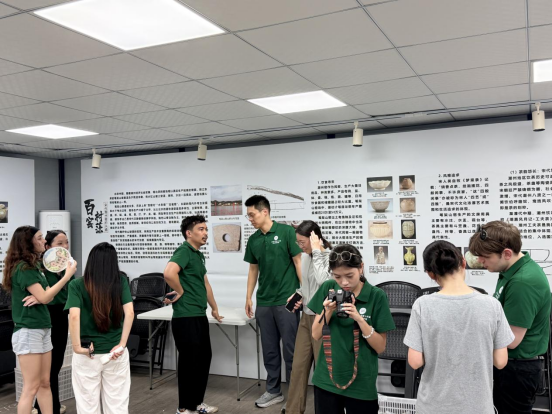
[Converse with master of arts and craftsand conduct field research in the town]
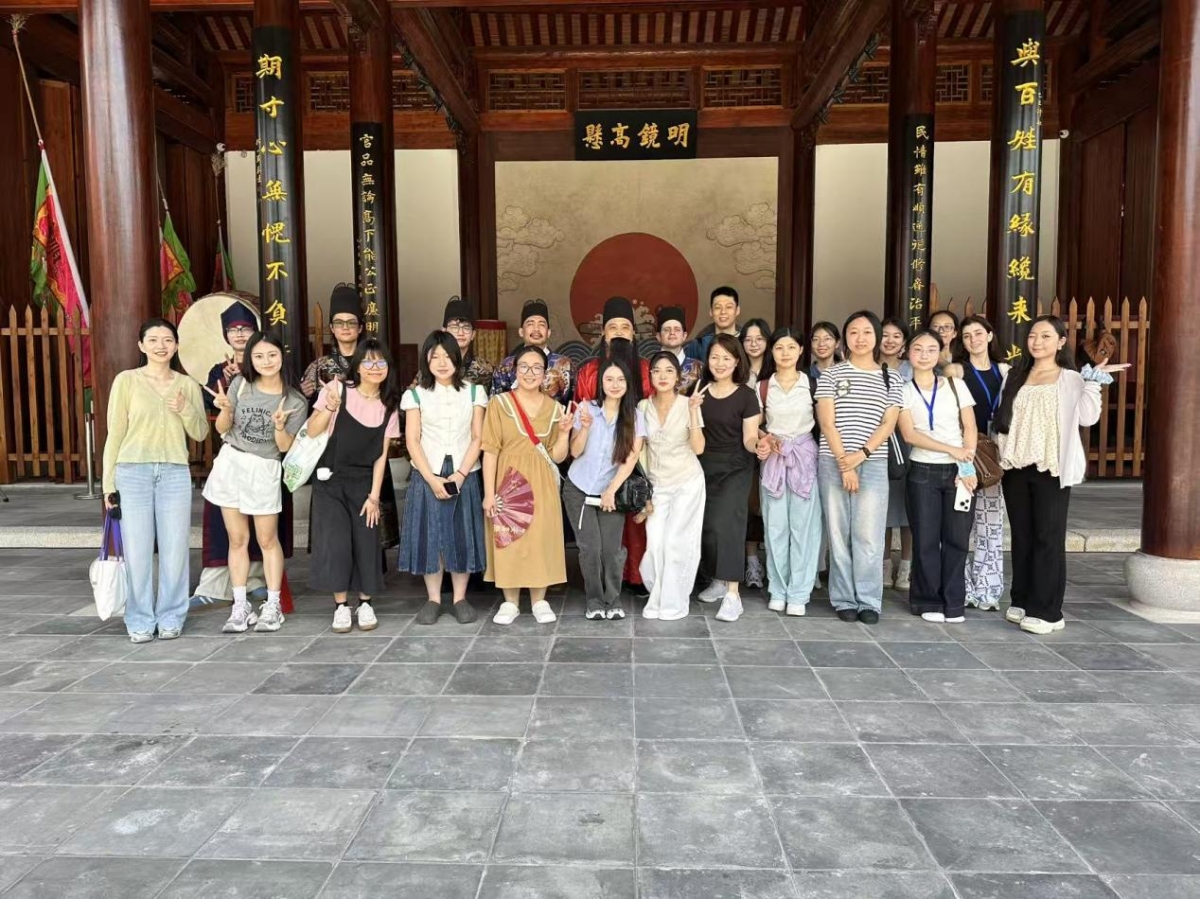
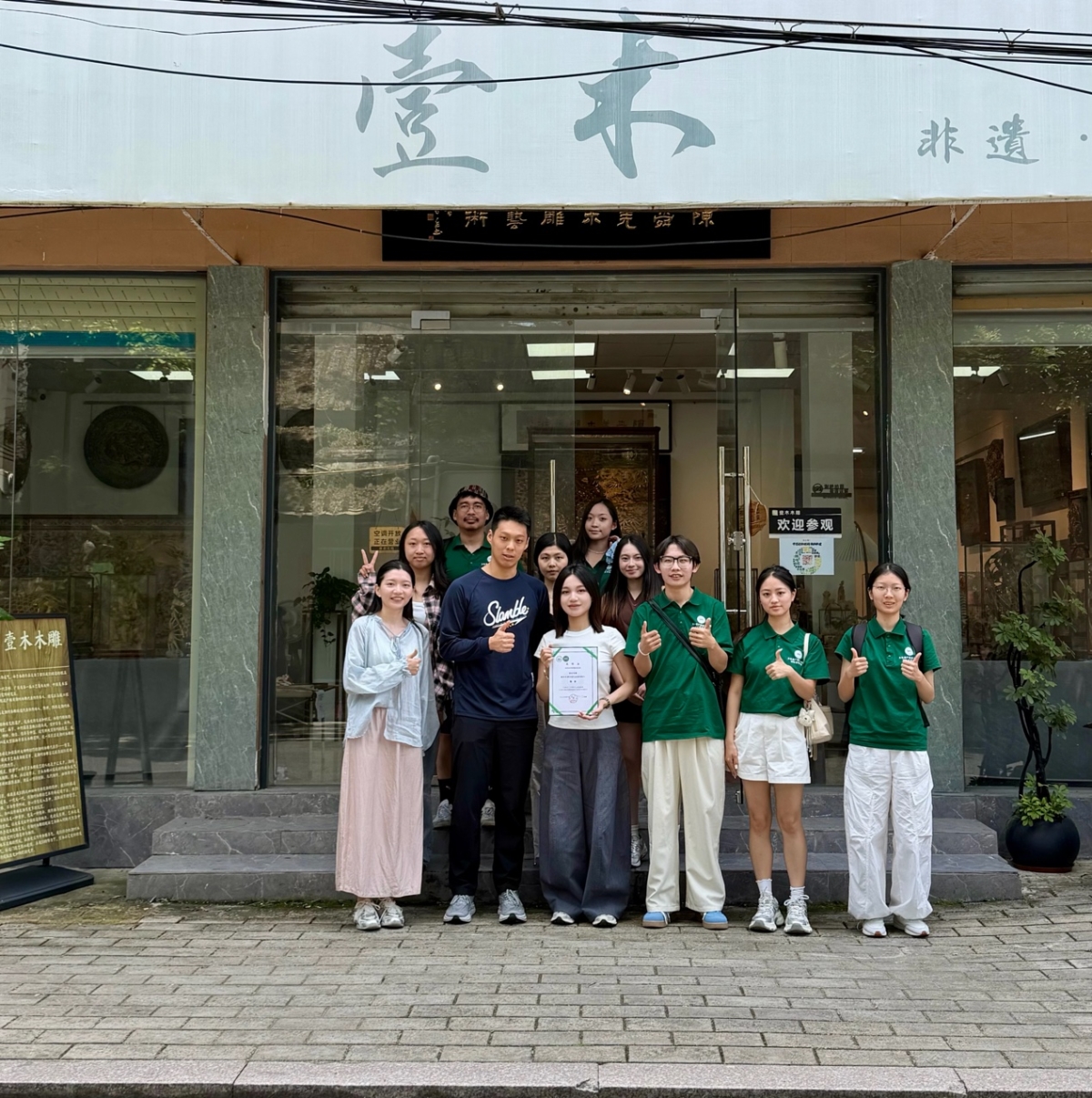
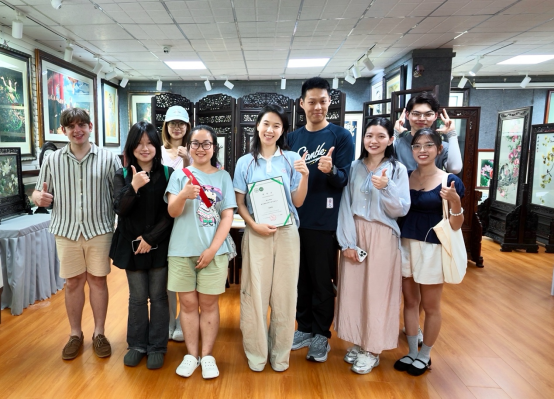
On the morning of July 22, the trainees admired the exquisite wood carvings of Chaoshan architecture at the Jilue Huang Ancestral Hall and experienced the official opening ceremony of the Chaozhou Prefecture Office at Zhenhai Tower. In the afternoon, under the reception of Secretary-General Zeng Xiaoming of the Chaozhou Wang Kang Traditional Culture Research Association (Qinglong Ancient Temple), the trainees visited Qinglong Ancient Temple to experience the spatial integration of Chaoshan folk customs with intangible cultural heritage such as wood carving and inlaid porcelain, gaining an in-depth understanding of the Guangdong provincial intangible cultural heritage—the Qinglong Temple Fair. Afterwards, at the Chaozhou Carving Museum, the trainees had face-to-face interactions with intangible cultural heritage inheritor Chen Xianghuang, marveling at each exquisite wood carving piece. They gained a deep understanding of how Mr. Chen has opened new avenues for intangible cultural heritage through online live streaming, and also profoundly appreciated the difficulties of contemporary intangible cultural heritage inheritance through the ups and downs of the inheritor’s personal experiences. In the evening, they watched the film "Dear You," where the historical memories depicted in the film resonated with the intangible cultural heritage phenomena they had personally encountered over the past few days, leaving the trainees deeply moved.
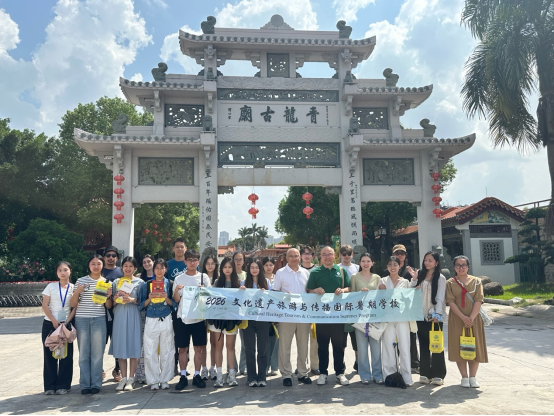
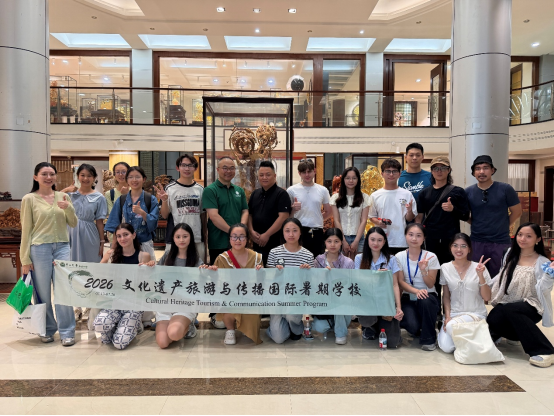
On July 23rd, each group conducted in-depth research based on their chosen topics. Some groups visited young woodcarver Chen Jia and Chao embroidery inheritor She Xulei, and also went deep into the ancient city of Chaozhou, engaging in extensive conversations with merchants and residents. They collected a large amount of firsthand material on topics such as intangible cultural heritage dissemination, heritage inheritance, and moderate commercial development.
4.Brainstorming: Discussing together and ultimately returning with many gains
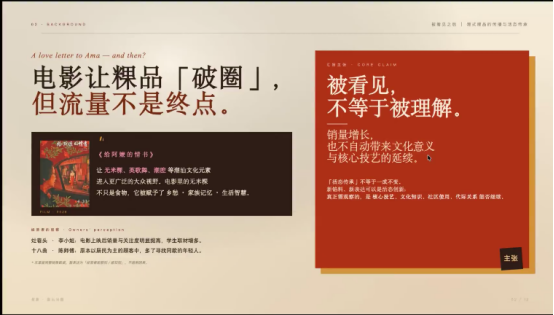
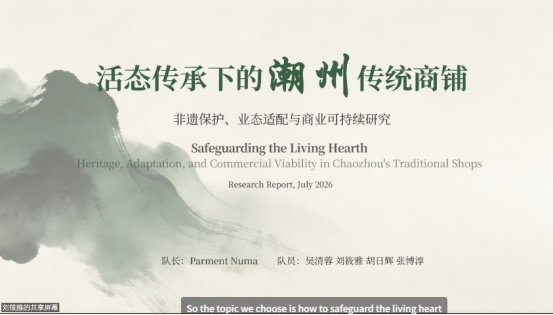
Due to the impact of the typhoon, the originally scheduled in-person summary report was adjusted to be held online. The students organized a vast amount of interview recordings and video materials, carefully polished their PPTs and short videos, and focused on topics such as Chaoshan rice cakes, time-honored shops, Chaozhou wood carving, Chaozhou embroidery, and cultural heritage community governance. They connected their observations and reflections on cultural heritage protection, inheritance, and revitalization around core research questions.
On July 26, each group presented solid research findings, and the panel of mentors provided precise feedback. At the end of the report, the project team awarded graduation certificates to all students. Thus, the 14-day study tour came to a successful conclusion.
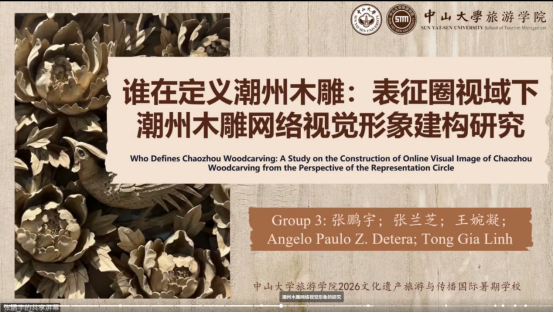
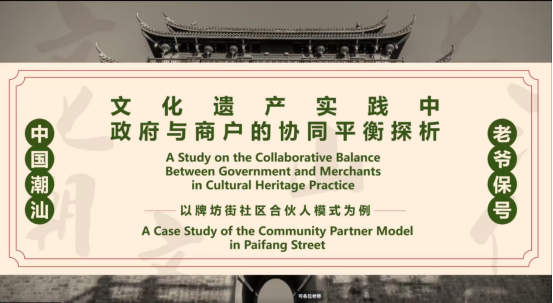
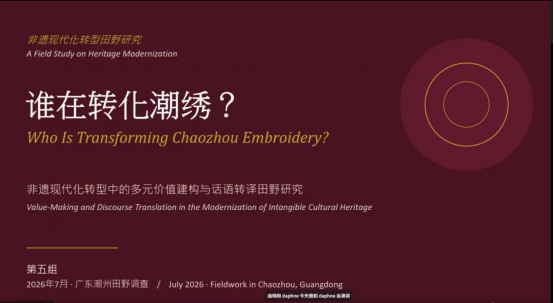
This summer school brought together the collective wisdom of scholars from domestic and overseas universities, archaeology experts, intangible cultural heritage inheritors, and community elites. Relying on a platform integrating digital cultural creativity and intangible heritage education, participants deeply explored overseas Chinese communities, ancestral halls, ancient kilns, and marketplaces, directly confronting the opportunities and challenges of heritage preservation. This established an equal, open, and diverse cross-cultural academic exchange platform.
The School of Tourism Management at Sun Yat-sen University will continue to cultivate the international summer school brand of "Cultural Heritage Tourism and Communication", opening research and study channels to young people worldwide, and continuously expanding a cross-disciplinary and cross-civilizational cultural heritage exchange network. Looking forward to another summer, let us meet again in Lingnan to continue writing the splendid chapters of mountains and seas!
